Remote and hybrid work are now standard for many organizations. Employees need reliable access to company files from home offices, job sites, and while traveling. For years, VPNs and remote desktop tools were the default solutions for enabling remote access.
Today, those approaches often introduce unnecessary security risks, operational complexity, and user frustration. Modern cloud platforms allow organizations to support secure remote work without extending the corporate network or requiring employees to connect to office workstations remotely.
This blog explores a more modern approach, breaking down how identity-based access, device management, and cloud platforms replace traditional VPNs.
Why VPN-Based Remote Access Creates Risk
VPNs were designed for a time when most work happened inside the office perimeter. When users connect through a VPN, they are often granted broad access to the internal network, even if they only need a limited set of files or applications.
This creates several challenges:
-
- VPNs extend internal network access beyond the office
- Security depends heavily on the device connecting to the network
- Performance issues and dropped connections disrupt productivity
- Remote desktop access ties work to a single machine instead of centralized data
As remote work becomes more common, these limitations become harder to manage securely at scale.
The Often-Overlooked Risk: The Endpoint Device
In many remote work environments, the greatest security risk is not the VPN itself. It is the device connecting to company resources.
Common issues include:
-
- Company laptops that are not enrolled in device management tools such as Microsoft Intune
- Employees using personal or outdated devices for work
- Limited visibility into whether devices are patched, encrypted, or compliant
- Inconsistent enforcement of security policies across remote endpoints
When unmanaged devices connect through a VPN, they can become unintended access points to sensitive company data. Even strong passwords and multi-factor authentication cannot fully offset the risk of a compromised or unprotected device.
In a modern security model, protection follows the identity and the device, not the office location.
Moving Away from Network-Based Access
Modern cloud platforms allow organizations to shift from network-based access to identity and device-based access controls.
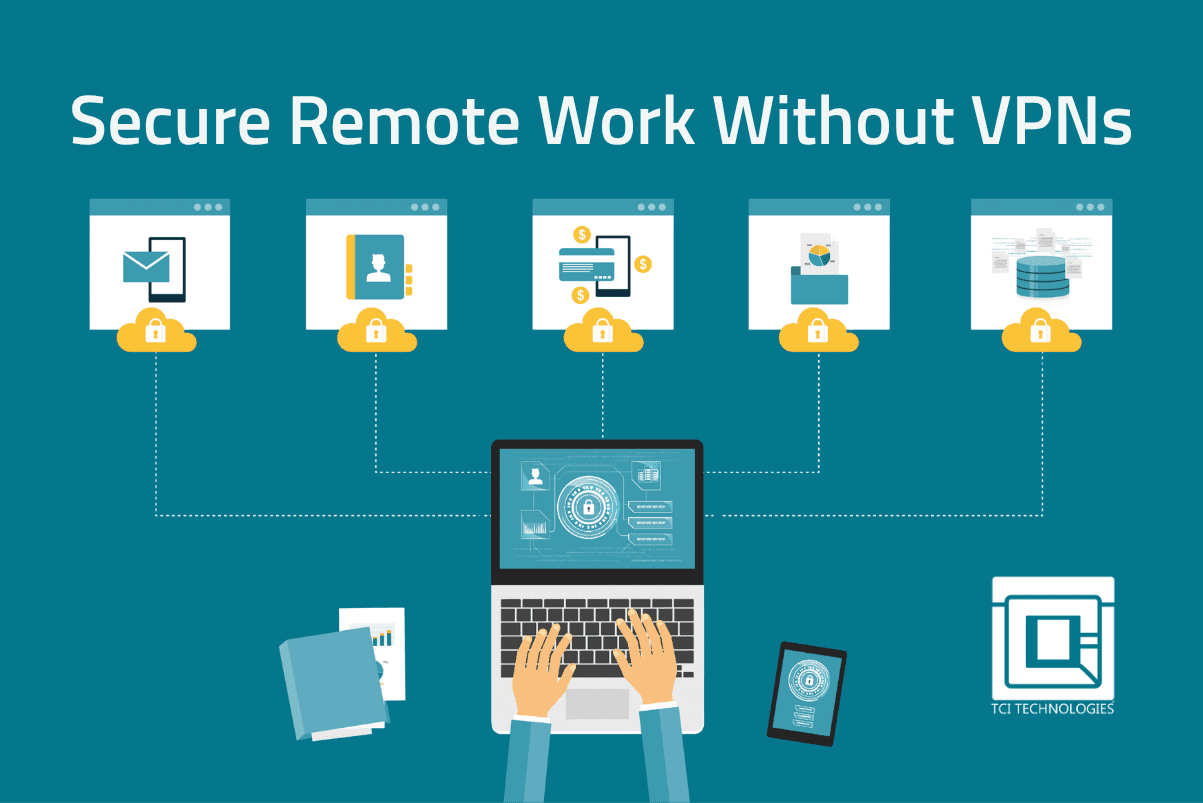
Instead of connecting users directly to the internal network, employees securely access files through cloud-based collaboration and storage platforms, such as SharePoint and OneDrive. Access decisions are based on user identity, device trust, and security compliance rather than physical location.
This allows employees to work with company data directly, without having to remote into an office computer or maintain a persistent VPN connection.
Why This Model Is More Secure
This approach:
-
- Reduces reliance on VPN infrastructure
- Keeps data centralized instead of scattered across devices
- Supports secure access from anywhere without exposing the internal network
- Eliminates the need to remote into office computers just to retrieve files
Organizations can further reduce risk by limiting access so that only approved and managed devices can open or download company files. This significantly lowers the likelihood of unauthorized access, even if credentials are compromised.
Tools such as Microsoft Intune and conditional access policies help enforce these protections while giving IT teams better visibility and control.
Supporting Remote Work Without Slowing Teams Down
Secure remote work is no longer about building higher walls around the network. It is about controlling access to data wherever employees work.
Modern cloud access, combined with proper device management, allows organizations to protect company data without forcing employees to rely on VPNs or remote desktop sessions.
How is your team accessing company data? A focused review can help identify gaps and define next steps without disrupting daily operations.